

Hospital Waste Management Plan
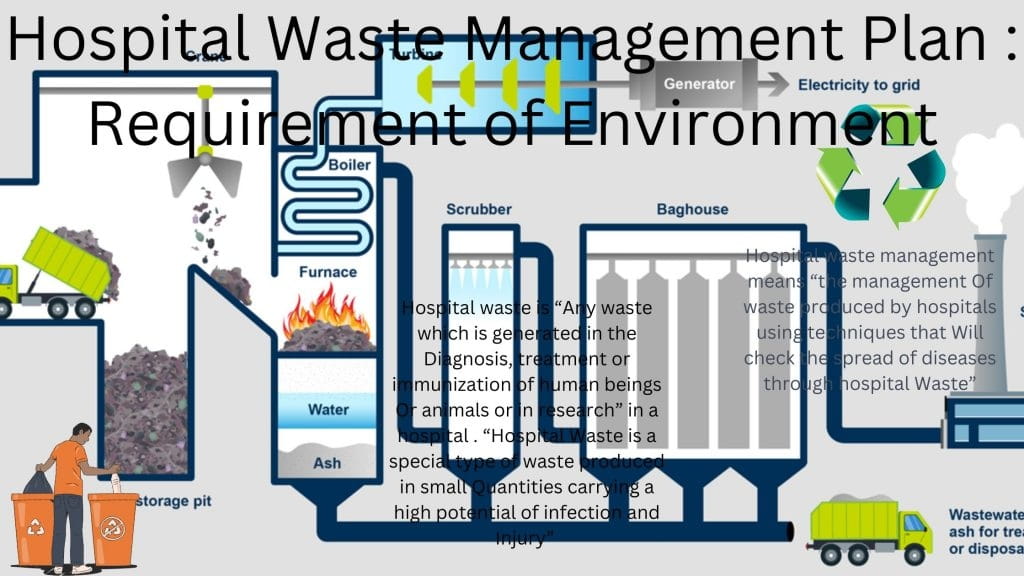
The management of hospital waste is “any waste that is generated in the diagnosis, treatment, or immunization of human beings or animals or in research” in a hospital. “Hospital waste is a special type of waste produced in small quantities, carrying a high potential of infection and injury. There are serious health effects from a public health standpoint if hospital waste is not handled properly. However, a hospital waste management plan is the prime requirement of the Environmental Protection Agency for hospitals to create a plan for segregation, handling, transport, disposal, and incineration.
Hospital waste management means “the management of waste produced by hospitals using techniques that will check the spread of diseases through hospital waste.” “Hospital waste consists of both risky waste and non-risky waste. -risky waste. Generally, risk waste includes infectious waste, pathological waste, pharmaceutical waste, sharps, chemicals, genotoxic waste, and radioactive wastes. Non-risk waste includes garbage and general day-to-day waste.
Waste Management for Hospitals
Medical waste management has not received much attention in developing countries. Segregation into risk And non-risk waste is usually not performed. Workers Have little awareness of associated hazards, and disposal techniques are poor. There is also a lack of awareness at health policy and law levels. In case of cytotoxic drugs, special care is needed. During disposal, contamination of handlers is easy, which can lead to ingestion and serious health effects. It is necessary to adequately educate them and to provide safety equipment. Every healthcare unit is responsible for their hospital’s waste management plan from the environmental department.

To achieve a sustainable waste disposal system, the three R’s—Reduce, Reuse, and Recycle—are generally used. used. They offer a simple guideline of the types of action to be taken. “taken.” They are in general order of priority and also called the waste “ministry hierarchy.”
Each hospital should prepare its own health management plan in accordance with national and international guidelines, specific to its unique requirements. It should be ensured that risks from hospital waste to individuals and the environment are minimized to a certain extent.
The proper management of healthcare waste depends on various factors like proper planning, funding, administration, and commitment at the policy level. If they are implemented properly, they can lead to better effects for both individuals and the environment. the environment.
Proper waste management can significantly lower the infectious disease burden, especially Hep B, C, and AIDS, which spread through the IV route.
Produced by foodstuff leftovers and their packaging
A hospital waste management plan should include segregation of waste into categories like biomedical, hazardous, and general waste. Proper disposal methods, staff training, and compliance with regulations are essential components. Regular audits ensure adherence to the plan.
A comprehensive hospital waste management plan encompasses various aspects to ensure the safe handling and disposal of different types of waste generated within healthcare facilities.
Waste Segregation & Hospital Waste Management Plan
Categorize waste into distinct types such as biomedical, hazardous, general, and pharmaceutical waste. Use color-coded bins or bags to easily identify and segregate different waste streams. All types of waste, when segregated into color-coded bags, then call the waste contractor that is approved by the Environmental Protection Agency for waste collection.
Biomedical Waste Management & Hospital Waste Management Plan
Handle infectious waste separately, including materials contaminated with blood or other potentially infectious materials. Use leak-proof containers with biohazard labels for collection.
Hazardous Waste Management
Identify and properly manage chemicals, pharmaceuticals, and other hazardous substances. Ensure compliance with local regulations for the disposal of hazardous waste or the National Hazardous Waste Management Policy.
General Waste
Manage non-hazardous waste through appropriate recycling and disposal methods. Educate staff on separating recyclable materials from general waste. Yearly training of staff for waste, environment, safety, health, and emergency handling shall be included.
Pharmaceutical Waste Management
Implement procedures for the safe disposal of expired or unused medications. Consider return programs with pharmaceutical manufacturers when possible.
Training and Education
Train healthcare staff on waste segregation, handling, and disposal procedures. Regularly update training programs to ensure compliance with changing regulations. However, it has been observed in an environmental audit of hospitals that some hospitals are totally unaware of hospital waste management rules. rules. That is fully explained in the Environmental Protection Act of every state.
Disposal Methods
Choose disposal methods based on the type of waste (incineration, autoclaving, landfill). Storage at the hospital must be in the colored dustbin with the colors red, yellow, and green for hazardous, biohazardous, and normal waste. This waste step is covered in the segregation. However, establish contracts with licensed waste disposal services.
Compliance with Regulations of the Hospital Waste Management Plan
Stay informed about local, state, and national regulations regarding healthcare housekeeping and waste housekeeping. However, regularly update the waste management plan to align with evolving standards. Also aware the staff about government audits regarding waste segregation and other regulations of the state’s environmental protection agency. protection agency.
Audits and Monitoring for Hospital Waste Management Plan
Conduct regular audits to assess the effectiveness of waste management practices. Monitor waste generation rates and adjust the plan accordingly. It is the primary responsibility of hospitals to look after waste from segregation to incineration; however, to control this, the monitoring housekeeping and administration departments of the hospital are responsible.
Emergency Response for Hospital Waste Management Plan
Develop protocols for managing accidental spills or exposure incidents. Equip staff with the necessary protective gear and tools for emergency situations and train them for emergency handling. Additionally, training should cover fire and medical emergencies and COVID-19.
Record Keeping
Maintain detailed records of waste generation, disposal, and compliance activities. However, documentation should be easily accessible for regulatory inspections.
A robust hospital waste management plan not only ensures the safety of healthcare workers, patients, and the environment but also contributes to regulatory compliance and sustainability efforts. Furthermore, regular reviews and updates are crucial to adapt to changing management practices and regulations of waste.