

Conservation of Environmental Nature
The conservation of nature is a responsibility that falls on humanity, as our actions have a profound impact on the natural world. Over the years, human activities such as deforestation, pollution, and overexploitation of resources have had a significant impact. That has led to the degradation of ecosystems and the loss of biodiversity. Preserving our planet’s flora, fauna, and ecosystems is essential for maintaining the delicate balance of life on Earth. By protecting forests, rivers, oceans, and wildlife, we preserve the beauty of nature and safeguard resources that future generations will depend on. Conservation efforts, including sustainable practices, protected areas, and environmental education, help to foster a more harmonious relationship between humans and nature. Through awareness, action, and a commitment to sustainable development, humanity can strive to heal the planet and ensure a thriving environment for all living beings.
Restoration and Conservation of Environmental Nature
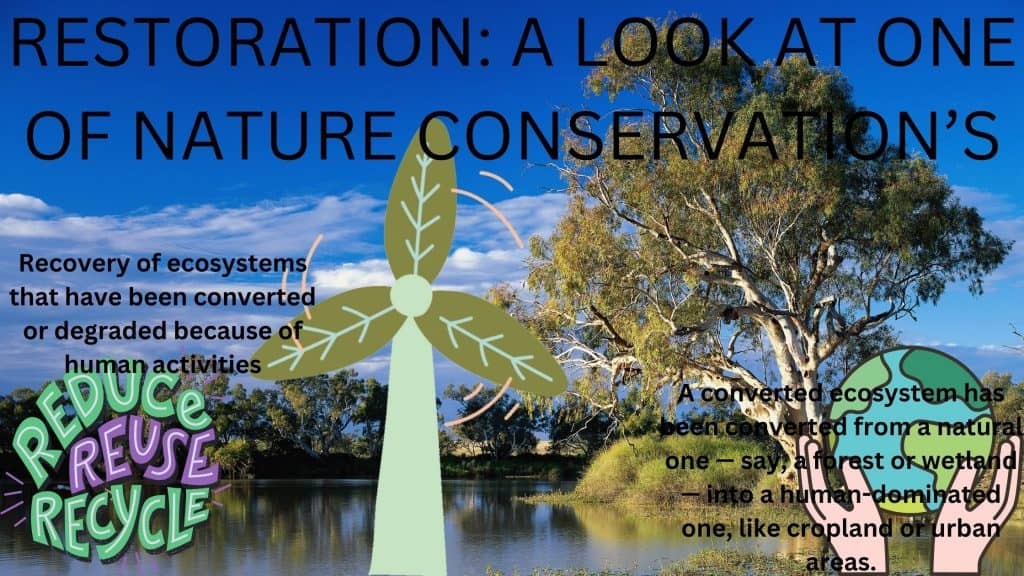
Ecosystem restoration involves supporting the recovery of ecosystems that human activities have converted or degraded. Things such as roads, agricultural lands, or energy infrastructure. It’s essentially a way to recover habitat for wildlife. That may also result in higher carbon sequestration and storage benefits in restored ecosystems. Human activities may damage the environment, but they also have solutions to restore it to its natural condition. Restoration of our ecosystem is a practice to remove or change the state of hazardous materials to non-hazardous ones through chemical processes.
Degraded & Converted Ecosystem
A converted ecosystem has been changed from a natural one—say, a forest or wetland—into a human-dominated one, like cropland or urban areas. A degraded ecosystem, on the other hand, isn’t as healthy as a natural one and doesn’t support as much biodiversity. The carbon storage is because of human activity like pollution, invasive species, and cutting down trees.
Mangrove Forests: A Part of Conservation of Environmental Nature & Ecosystems
Mangrove forests are vital coastal ecosystems that play an essential role in protecting shorelines from erosion, storm surges, and flooding. These unique forests, with their dense roots and specialized trees, provide crucial habitats for various marine and terrestrial species, including fish, crustaceans, and migratory birds. Mangroves also act as significant carbon sinks, absorbing and storing large amounts of carbon dioxide, which helps mitigate climate change. However, they are under threat from deforestation, pollution, and coastal development. Protecting mangrove forests through conservation, sustainable practices, and community involvement is critical for preserving biodiversity. That can support local livelihoods and maintain the health of coastal environments and sea life.
Landscapes for Restoration
We can and should restore both converted and degraded landscapes. Restoration of converted lands may result in higher benefits for biodiversity and climate. Restoring degraded lands is likely more feasible because it is easier to work in landscapes without human infrastructure. Currently, we possess more data on converted ecosystems than on degraded ones.
Benefits of Restoration and Conservation of Environmental Nature
Restoration can help to create or expand areas where wildlife lives, breeds, and mates. This is especially important for Canada, where over 800 different animal and plant species are at risk of extinction. Healthy habitats can also sequester carbon from the atmosphere and store it in plants and soils, helping to fight climate change. But while biodiversity and climate are important, there are other elements we need to consider, too. Any restoration plans have to take into consideration the knowledge. We should address the priorities of Indigenous Peoples and local communities to ensure their benefit. To save earth’s ecosystem, the conservation of nature (soil, water, and environment) will be achieved by reducing human effects on the natural environment and saving for coming generations.