
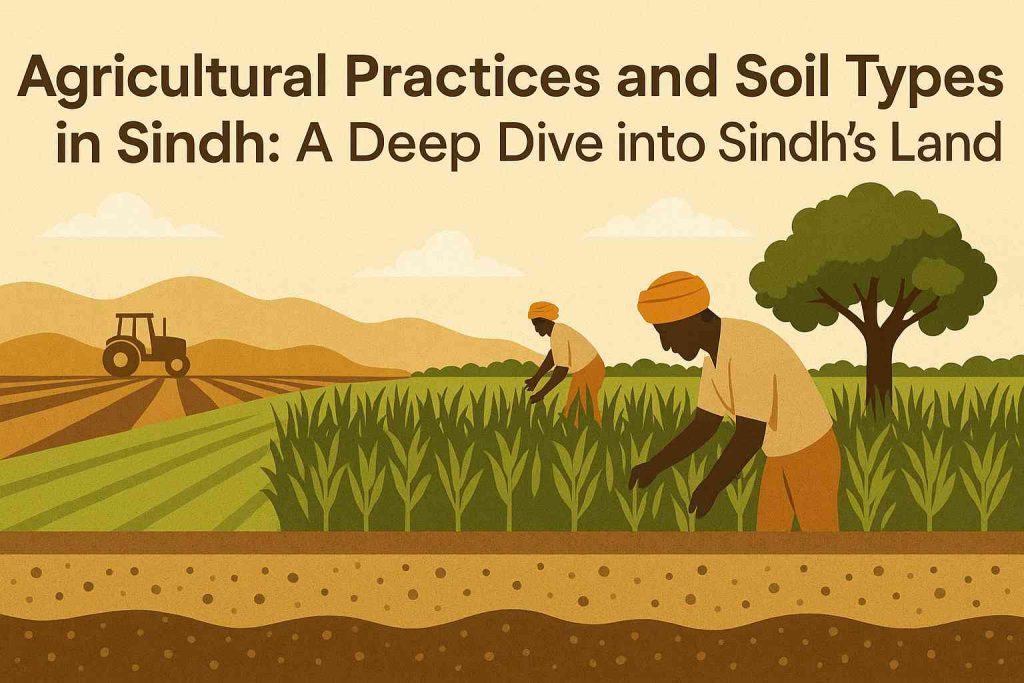

Agricultural Soil of Sindh
A study on the agricultural soil of Sindh, which looked at 101 samples and was done by the chemspectro.com group, found that the soil is mostly neutral to slightly alkaline, has a good level of total dissolved solids, and has water-soluble phosphorus in good shape, but total phosphate is higher than normal, which could lead to problems with groundwater quality and nutrient runoff, likely because of the high amounts of fertilizer used in farming. While heavy metals were found on the upper-level borderline of the world’s average earth crust value, the different findings of soil research in the Land of Sindh and other provinces of Pakistan show soil is moderately alkaline, low in micronutrients, and higher in concentration of metals.
The soil in Sindh, Pakistan, varies significantly across different regions, influenced by climate, geography, and agricultural practices, with some areas exhibiting high levels of salinity and others showing nutrient deficiencies, which can impact crop yields.
Types of Soil & Agricultural Land of Sindh
Alluvial Soil (Indus Plain)
This type of soil is typically found near floodplains and rivers. The soil is primarily composed of sand, loam, and silt. This type of soil is light and porous, which makes it ideal for agriculture. The soil becomes rich in minerals and nutrients as a result of yearly or routine water washing from floods or rivers. However, its composition mainly consists of sand, while the upper surface may contain a higher amount of clay and a lower-to-average amount of silt. The composition of clay ranges from 5-15%, silt from 15-25%, and sand from 50-80%.
Sandy Soil (Thar Desert, Cholistan)
Found in arid and semi-arid regions, these barren soil areas, which depend on rain for crop cultivation, contain low organic matter and limited nutrient value. The soil is primarily composed of sand and contains minimal clay due to its lack of connection to river water. Light, acidic, and nutrient-poor. Nutrients do not remain in the soil because of low organic matter and clay content. Furthermore, these lands of Sindh composition contain low clay (0-10%), low silt (0-15%), and high levels of sand (85-100%).
Clayey Soil (Hyderabad, Badin, Indus Delta)
Generally, this soil is heavy and sticky, exhibiting high water retention.
Generally rich in nutrients, clayey soil is ideal for crops that require moisture. Due to the high amount of clay, it retains water and most nutrients. However, this type of soil is beneficial for crops and the environment because it doesn’t allow nutrients to leach and run off. Additionally, the composition of these soils contains healthy levels of nutrients like minerals, an adequate amount of organic matter, and soil textures like clay (15-25%), silt (5-20%), and sand (60-85%).
Loamy Soil (Tando Allahyar, Mirpur Khas)
Loamy Soil (Tando Allahyar, Mirpur Khas) is a medium-textured soil that consists of a mix of sand, silt, and clay. However, it supports diverse crops due to balanced properties, such as excellent drainage and nutrient retention, which are essential for healthy plant growth. It can also be found in irrigated agricultural areas. Its composition also has a texture that is balanced.
Agricultural Soil of Sindh & Properties
- Salinity: Many areas have low to medium salinity, but some regions experience high salinity, affecting crop growth.
- pH Levels: Mostly slightly alkaline (slightly to neutral), with some neutral or slightly acidic patches. However, this property of soil heavy metals doesn’t transfer to crops and leaches into groundwater with less runoff.
- Organic Matter: Generally low to medium, requiring fertilization for sustainable agriculture. Furthermore, to overcome this, proper organic fertilizer may be used. This soil organic matter was sufficient prior to the 1990s, though. After the introduction of chemical fertilizer to crops, organic matter becomes reduced. Additionally, due to low organic matter, the nutrients cannot be retained in the soil; they either leach or run off.
- Nutrient Content: Phosphorus levels vary from low to high, while potassium is generally adequate.
Challenges & Management for Agricultural Soil of Sindh
- Salinity and waterlogging are common in irrigated areas and require drainage solutions, such as the installation of subsurface drainage systems or the use of raised beds to improve water management.
- Soil Fertility: Site-specific fertilization is needed to maintain productivity. This is because most farmers are unaware of the correct fertilizer dosage and their soil composition.
- Climate Impact: Changing weather patterns affect soil composition and health. Unauthorized dumping of municipal, industrial, and even hospital waste onto agricultural land is a contributing factor.
However, several factors influence the soil composition in Sindh, Pakistan:
Climate & Weather Conditions for Agricultural Soil of Sindh
- Arid & Semi-Arid Climate: Sindh experiences high temperatures and low rainfall, leading to dry and sandy soils.
- Monsoon Impact: Seasonal rains affect soil moisture and fertility, especially in agricultural regions, by replenishing water supplies and enhancing nutrient availability for crops during the growing season.
Geological & Geographical Factors for Agricultural Soil of Sindh
- Indus River Influence: The river deposits alluvial soil, rich in minerals and nutrients.
- Desert Regions: Areas like Thar have sandy, nutrient-poor soil with low water retention.
Soil Salinity & Waterlogging for Agricultural Soil of Sindh
- High Salinity: Many regions suffer from saline soil due to excessive irrigation and poor drainage.
- Waterlogging: Improper drainage leads to stagnant water, affecting soil aeration and fertility.
Agricultural Practices for Agricultural Soil of Sindh
- Intensive Farming: Because of overuse of fertilizers and pesticides, it alters soil composition. However, the studies show the overuse of fertilizer results in soil pollution that affects the environment and food chain.
- Crop Rotation & Irrigation: Different crops and irrigation methods impact soil nutrients and texture. Different crops and plants can change soil composition, either polluting or removing pollutants, which influences the overall health of the ecosystem and the quality of food produced.
Organic Matter & Nutrient Content
- Low Organic Matter: Sindh’s soil generally lacks organic material, requiring fertilization.
- Essential Nutrients: Varying levels of phosphorus, potassium, and micronutrients affect soil health.
Human Activities & Industrial Impact
- Urban Expansion: Construction and industrial waste contribute to soil degradation.
- Mining & Pollution: Extraction activities and pollution alter soil properties, leading to increased contamination and reduced fertility in affected areas.
The chemical properties and composition of soil in Sindh, Pakistan, vary across different regions. Here are some key aspects:
Chemical Properties of Agricultural Soil of Sindh
- pH Levels: Generally neutral to slightly alkaline (8.4-9.1).
- Salinity: Some areas suffer from high salinity, affecting crop growth, particularly in regions where irrigation practices have led to salt accumulation in the soil.
- Organic Matter: Further soil of Sindh shows low-to-moderate amounts, requiring fertilization for sustainable agriculture.
- Cation Exchange Capacity (CEC): Varies depending on soil type, influencing nutrient retention, which is crucial for determining the soil’s ability to supply essential nutrients to crops effectively.
Macronutrients of Agricultural Soil of Sindh
- Nitrogen (N): Essential for plant growth but often deficient. Hyderabad, Badin, Tando Allahyar, and Sukkur contain adequate amounts of nitrogen in the soil. However, sandy and alluvial soils are deficient in nitrogen nutrients.
- Phosphorus (P): However, P varies from low to high, affecting root development. Additionally, this nutrient is considered the main content for nutrition for crops; this element is found in enough clayey and loamy soils. Furthermore, this element is found to be adequate in the alluvial soil and deficient in the sandy soil in the desert areas of Sindh.
- Potassium (K): Generally adequate, supporting plant health. Potassium in the river and groundwater keeps the soil in Sindh at the required level. Routine analysis of the Indus River water reaching Karachi for drinking purposes found the concentration of potassium to be in the range of 6-10 mg/L or ppm. Furthermore, these variations are due to the addition of rainwater in the Indus River, which can dilute or concentrate the levels of potassium and other nutrients depending on the rainfall patterns and seasonal changes.
Micronutrients of Agricultural Soil of Sindh
- Copper (Cu): Ranges from 5.82 to 8.2 µg/g.
- Manganese (Mn): Found between 6.7 and 8.3 µg/g.
- Zinc (Zn): Values range from 0.12 to 1.2 µg/g.
Composition of Agricultural Soil of Sindh
- Clay Content: 27–40% in alluvial soil, higher in clayey regions. Additionally, these soils contain higher amounts of clay due to water sources coming from mountains and rain runoff from higher-altitude areas.
- Silt Content: 15-53%, contributing to soil texture.
- Sand content is 20–45%, affecting drainage and aeration. Due to the higher amount of sand content, these types of soil show a lower retention level of water and nutrients. Reduced organic matter made it impossible for nutrients to attach to or stay in the soil.