
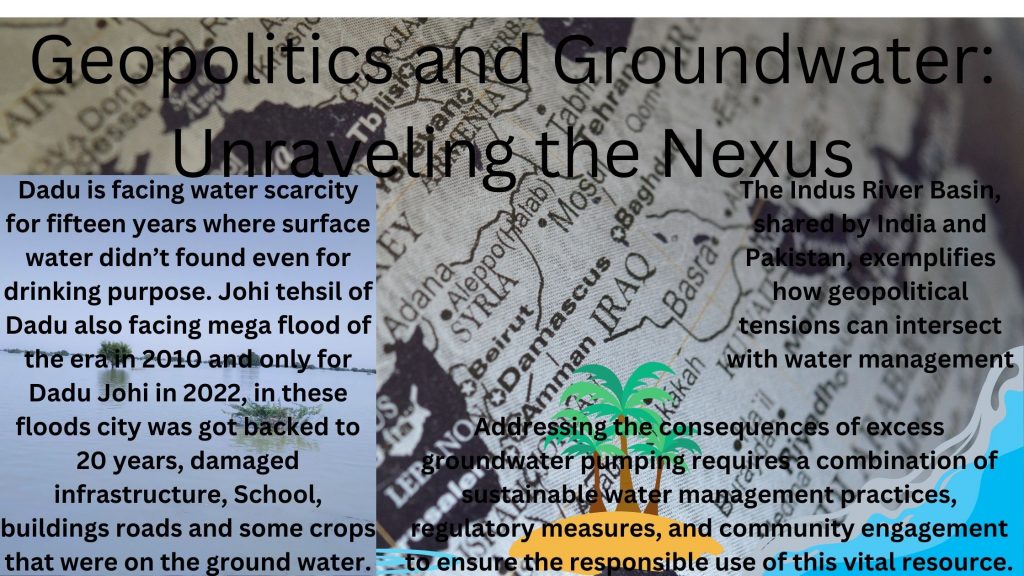
Geopolitics refers to the study of the effects of geography, such as geography’s influence on political, economic, and social structures and behaviors of states and international relations. It involves the examination of how geographical factors, including location, resources, and physical features, shape the political dynamics and power struggles between nations on a global scale. Geopolitics explores how these factors influence foreign policy, conflict, and cooperation among countries.
Geopolitics, the interplay of political power on a global scale, has far-reaching implications that extend beyond traditional spheres of influence. One often overlooked arena where geopolitics exerts a significant impact is on the world’s groundwater resources. The relationship between geopolitics and groundwater, exploring how political dynamics can shape access to and management of this vital resource.
The Geopolitical Lens
Geopolitics involves the pursuit of power, territory, and resources by nations on the global stage. As countries assert their influence, water resources become strategic assets. Regions with abundant groundwater reservoirs may find themselves at the center of geopolitical struggles, with nations vying for control to secure their water future.
Water as a Strategic Resource and Geopolitics
Groundwater, a hidden treasure beneath the Earth’s surface, has become a critical component of national security. As surface water sources face increasing stress due to climate change and over-extraction, nations turn their attention to the vast reservoirs stored underground. Geopolitical tensions often manifest in disputes over transboundary aquifers, where the control of groundwater can influence economic prosperity and geopolitical standing.
Case Studies for Geopolitics
Middle East: The arid Middle East, already grappling with political complexities, faces heightened tensions over shared groundwater resources. Countries like Israel, Jordan, and Palestine vie for control over aquifers, adding another layer to the region’s intricate geopolitical landscape.
South Asia: The Indus River Basin, shared by India and Pakistan, exemplifies how geopolitical tensions can intersect with water management. Disputes over control of the region’s rivers impact not only agriculture but also the groundwater resources that sustain local communities.
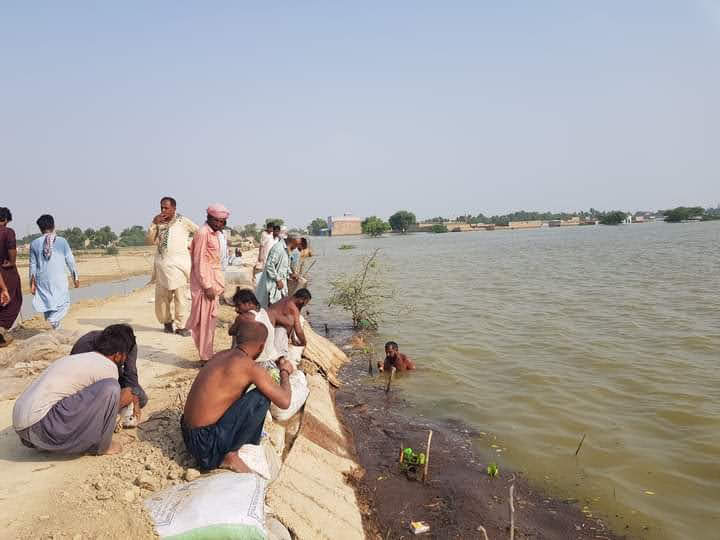
In Pakistan, especially Sindh and District Dadu, there has been water scarcity for fifteen years, where surface water wasn’t found even for drinking purposes. The Johi tehsil of Dadu also faced the mega flood of the era in 2010, and only Dadu and Johi faced it in 2022. In these floods, the city was set back 20 years, damaging infrastructure, schools, buildings, roads, and some crops that were on the groundwater.
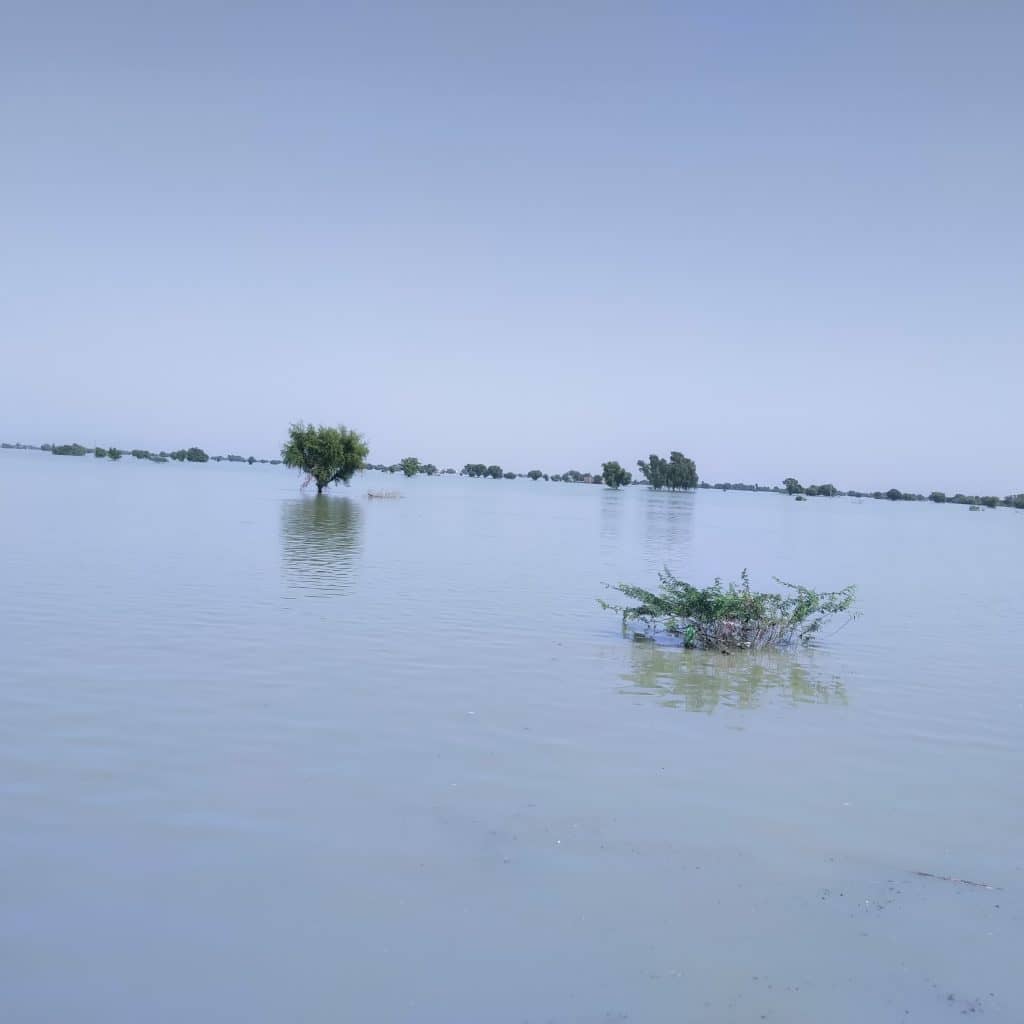
The people of Johi feel comfortable with floods rather than normal life because during floods the groundwater level rises and on other days the land is changing to barren soil, and all the farmers are changing to groundwater pumping that results in increasing total dissolved solids or increasing salinity of underground water. Higher authorities are required to provide the river to Johi Dadu to stop pumping and stop increasing the salinity of underground water. By river water, the salinity of underground water decreases to save the environment, nations’ lives, and good-quality water.
Sub-Saharan Africa: Geopolitical considerations in Africa often revolve around control of the Nile River. Upstream and downstream countries engage in diplomatic struggles over the river’s waters, affecting not only surface water but also the interconnected groundwater systems.
Environmental Impact and Geopolitics
Geopolitical decisions and power dynamics can have profound consequences for the environment. Over-extraction of groundwater due to geopolitical motivations can lead to land subsidence, saltwater intrusion, and ecological imbalances, further exacerbating environmental challenges in affected regions.
Towards Sustainable Solutions to Geopolitics
Addressing the complex interplay between geopolitics and groundwater requires a multi-faceted approach. International cooperation, equitable water-sharing agreements, and sustainable groundwater management practices can mitigate the negative impacts of geopolitical struggles and ensure the long-term viability of this crucial resource.
Using excess groundwater pumping results
Excessive groundwater pumping can lead to a range of detrimental consequences, impacting both the environment and communities that depend on these water sources. Using excess groundwater leads to making groundwater salty and making it unavailable for the next generation. Here are several results of excessive groundwater pumping:
Depletion of Aquifers
Continuous over-extraction can deplete aquifers, reducing the overall volume of water stored underground. This depletion is often unsustainable and can lead to long-term consequences for water availability.
Land Subsidence
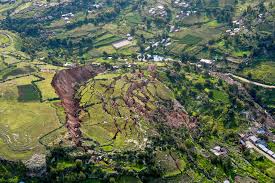
Excessive pumping can cause the land above aquifers to sink, a phenomenon known as land subsidence. This can damage infrastructure, such as buildings and roads, and disrupt the natural landscape. According to research, extracting and pumping groundwater produces space under the earth; that space will be fulfilled by glaciers, resulting in a high level of landslides.
Saltwater Intrusion
Coastal areas relying on groundwater may face saltwater intrusion when excessive pumping reduces the freshwater pressure, allowing salty seawater to infiltrate the aquifer. This can contaminate drinking water supplies and harm agriculture.
Ecological Impact
Groundwater pumping can disrupt the natural flow of underground water, impacting ecosystems dependent on groundwater. Wetlands, springs, and streams may suffer, affecting biodiversity and ecological balance.
Geopolitics and Impact on Surface Water
Excessive pumping can also influence surface water bodies. Groundwater contributes to the flow of rivers and streams, and over-extraction can reduce these flows, affecting the availability of water for downstream users and ecosystems.
Social and Economic Consequences for Geopolitics
Communities relying on groundwater for agriculture, industry, and domestic use may face water shortages, affecting livelihoods and economic activities. The social fabric can be strained as competition for dwindling water resources intensifies.
Regulatory Challenges
Governments often need to implement regulations to manage groundwater use. Excessive pumping may lead to the need for stricter regulations, permits, and monitoring, adding administrative burdens and potential conflicts among users.
Long-Term Sustainability Concerns
Over time, excessive groundwater pumping jeopardizes the sustainability of water resources. If the rate of extraction exceeds the rate of natural recharge, it can lead to a scenario where aquifers may take decades or even centuries to replenish.
Solving the problems caused by over-pumping groundwater requires a combination of sustainable water management practices, regulatory measures and community engagement to ensure the responsible use of this essential resource. Underground water becomes . . . Pumping of excess groundwater causes. Depth concentrated salt holes may cause landslide and less availability of usable water for irrigation and drinking and may result in level disturbance for earth or reshaping.