

Nitrate in drinking water can come from both anthropogenic (produced by humans) and natural sources. It is mostly connected to industrial and agricultural activity. The presence of the nitrogen and oxygen compound nitrate in drinking water could have a number of effects:
High nitrate levels in drinking water can be harmful to your health, especially if you’re pregnant or nursing a baby. After ingestion, nitrate can turn into nitrite in the body, which can affect the blood’s ability to carry oxygen. Methemoglobinemia, also referred to as “blue baby syndrome,” is a disorder that can be fatal for newborns. Elevated nitrate levels in water can be a sign of contamination from industrial or agricultural runoff or wastewater discharges. It can indicate the existence of additional toxins in water sources and is frequently used as a sign of water contamination. For further studies, see WHO guidelines.
Contamination of Drinking Water
In some areas, nitrate contamination of groundwater is a major issue. Nitrate leakage into groundwater can be caused by agricultural practices, including the use of fertilizers and livestock waste. Thus, groundwater sources that are used for drinking water in many rural regions may as a result have elevated nitrate levels.
Impact on the Environment
Nitrate contamination of surface waterways can harm aquatic habitats. Algal blooms, which kill aquatic life and disturb ecosystems, can result from too much nitrate in water bodies. High nitrate concentrations have been linked to water contamination and a decline in water quality.
Water treatment procedures can be used to lower nitrate levels to safe and acceptable levels to address the issue of nitrate in drinking water. These procedures frequently use reverse osmosis or ion exchange devices to purge nitrate ions from the water supply. A high level of nitrate in water can indicate a number of environmental and health problems. Increased nitrate levels in water can mean various things, including:
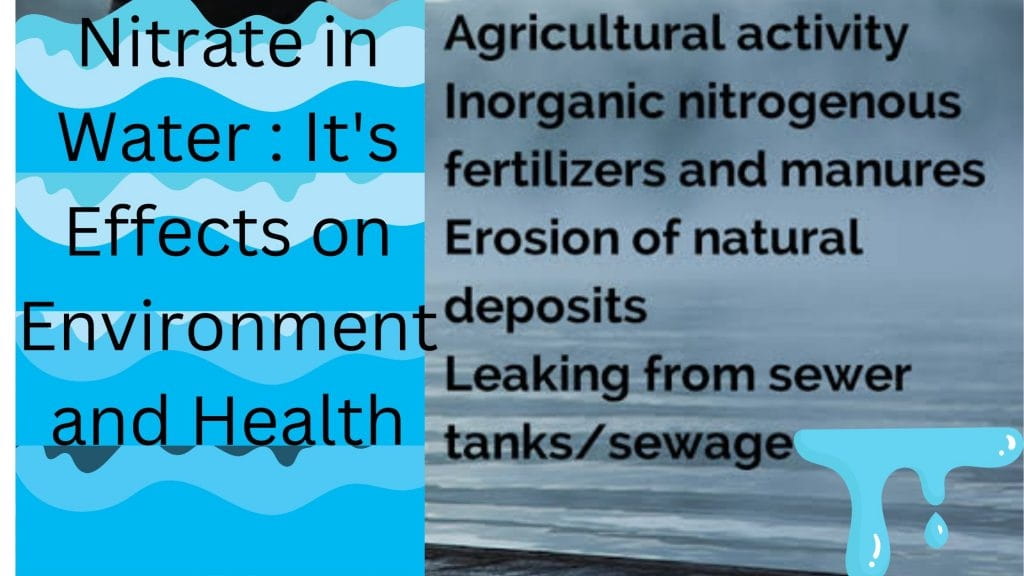
High nitrate concentrations are frequently a symptom of water contamination. The two most common human activities that cause nitrate pollution in aquatic bodies are agriculture and wastewater discharges. Nitrates can enter surface water and groundwater through the overuse of nitrogen-based fertilizers and animal farm effluent. A common link between nitrate contamination of water and agricultural runoff is this. Excess nitrates from fertilizer crops can be transported by rainwater into surrounding streams, rivers, and groundwater. The quality of drinking water sources and aquatic habitats may both be impacted by this contamination.
Wastewater Discharges and Contamination of Ground Drinking Water
Nitrates are present in wastewater from both urban and industrial regions. This wastewater drains into aquatic bodies and causes nitrate pollution if it is not properly handled. To prevent contaminating water sources, industrial facilities and municipal sewage systems must effectively manage and treat their effluent.
Health Problem Due to Drinking Water
Although nitrates do not generally cause health dangers, they can do so when they are transformed into nitrites in the body. Nitrites can hinder the blood’s ability to carry oxygen and other nutrients. That can lead to a condition called methemoglobinemia, commonly known as “blue baby syndrome.” This condition is especially dangerous for infants and pregnant women. It is carcinogenic through endogenous nitrosation. The nitrate is a precursor in the formation of N-nitrosamine compounds (NOC); most NOC are carcinogens and teratogens. Thus, exposure to NOC formed after ingestion of nitrate from drinking water and dietary sources may result in cancer, birth defects, or other adverse health effects.

Water bodies may become eutrophicated due to an excess of nitrate in the water. Eutrophication, which primarily affects lakes and rivers, is the excessive growth of algae and aquatic plants as a result of high nutrient (nitrogen and phosphorus) levels. Nitrate contamination causes algal blooms that kill fish and other aquatic life, disturb aquatic ecosystems, and lower oxygen levels. Nitrate contamination is a cause for concern because it frequently indicates the caliber of water and may imply the existence of other pollutants. As part of a thorough evaluation of water contamination. It is standard practice in water quality monitoring to test for nitrate concentrations.
Research for Nitrate in Drinking Water
Nitrate in drinking water from laboratory analysis proved that it may vary in drinking water. Nitrate from 4 to 20 mg/L in natural water, while some sources rich in agricultural runoff may contain higher amounts. Thus, the level of nitrate in surface and ground water depends on fertilizer user trends and runoff in rivers. From research studies published in 2021, the River Indus (Sindh, Pakistan) has a nitrate amount of 1-16 mg/L from start to end (final to the Arabian Sea).
From the study of water analysis, it shows that there are contamination sources that run off their waste into the river and contaminate the water. However, the Environmental Protection Agency should always take action against them for the compliance of the law or act of their state. To protect drinking water from contamination, wastewater should always be treated and used for agricultural purposes. Wastewater may not be drained into the river that will be the source of drinking water at the end of the river.
In order to safeguard the ecosystem and ensure that drinking water is safe, nitrate levels in water sources must be closely monitored. To protect the public’s health, local environmental organizations and water authorities often set rules and guidelines for permissible nitrate levels in drinking water.
In areas where nitrate pollution is a recognized problem, regular testing is needed. However, monitoring of nitrate levels in drinking water sources is crucial to guarantee the water is safe for use. The permitted limits for nitrate in drinking water are defined by relevant health and environmental agencies to safeguard the general public’s health. If nitrate concentrations go over certain limits. It is important to take corrective actions to ensure the safety of the water supply.