
Sources of Mercury Pollution
Mercury is a toxic heavy metal that can harm the environment and human health, but its pollution occurs through industrial processes, mining, and burning fossil fuels. It accumulates in water bodies, soil, and air and can travel long distances through the food chain. Because it affects ecosystems, wildlife, and human health, it causes neurological damage, birth defects, and kidney damage. However, the Minamata Convention aims to reduce mercury emissions and releases globally. Reducing its use in products like thermometers, batteries, and lighting can help as well as minimize its environmental impact. Furthermore, in this article, you will learn about sources of mercury pollution in the environment and mitigations, as well as international conventions.
Main sources of Mercury pollution
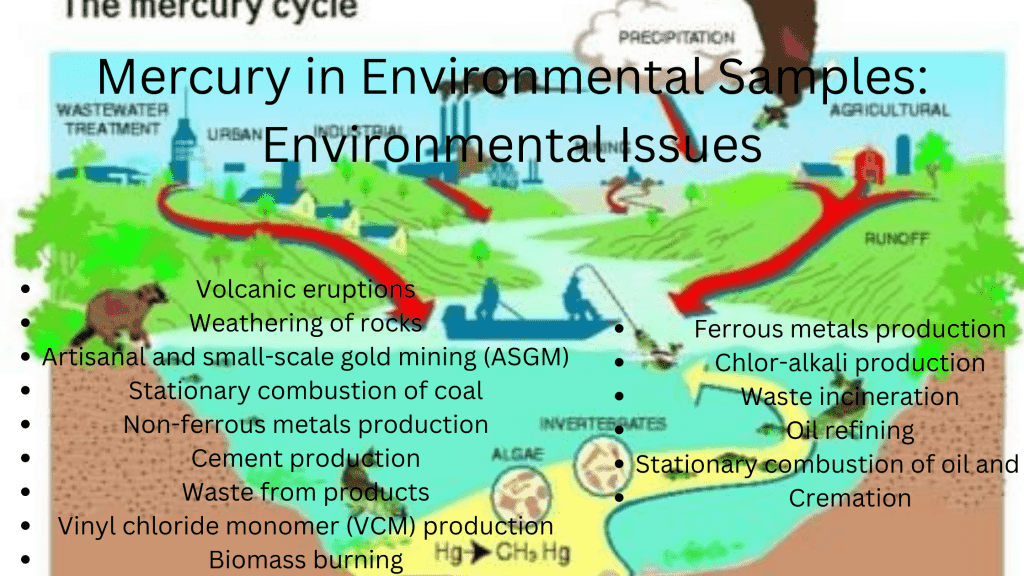
- Volcanic eruptions
- Weathering of rocks
- Artisanal and small-scale gold mining (ASGM)
- Stationary combustion of coal
- Nonferrous metal production
- Cement production
- Waste from products
- Vinyl chloride monomer (VCM) production
- Biomass burning
- Ferrous metals production
- Chlor-alkali production
- Waste incineration
- Oil refining
- Stationary combustion of oil and gas
- Cremation
Some facts about Sources of Mercury pollution
Major sources
Its pollution comes from industrial processes, mining, and burning fossil fuels, particularly coal. The largest source is small-scale gold mining, which accounts for 20%–30% of global emissions.
Health impacts
Its exposure causes brain and kidney damage, birth defects, and neurological disorders. It can also lead to tremors, muscle weakness, and vision and hearing problems.
Environmental impacts of Sources of Mercury Pollution
It accumulates in water bodies, soil, and air, contaminating ecosystems and wildlife. It affects fish and shellfish, making them unsafe for human consumption. When entertaining in soil, it will shift to the food chain and transfer to the human body. As stated above, it has different sources; however, the main source of mercury (Hg) is fertilizer, which is added to soil to increase crop production. However, the presence of toxic metals in fertilizer leads to heavy pollution in both soil and food.
International efforts on Sources of Mercury Pollution
The Minamata Convention aims to reduce mercury emissions and releases globally. Signatory countries must develop national action plans to minimize mercury use and emissions because this is the only way to reduce the environmental impacts.
Reducing Mercury use
Alternatives to mercury-based products, like thermometers and lighting, can help minimize their environmental impact. Recycling and proper disposal of mercury-containing products are crucial because proper disposal and incineration are prime responsibilities of the waste producer. Disposal by incineration is also important for safe environmental practices and reducing environmental toxicity, as it affects health by penetrating the lungs and causing lung diseases.
EPA regulations on Sources of Mercury Pollution
In the US, the EPA sets standards for Hg emissions from power plants, incinerators, and other industrial processes. The agency also regulates its use in products and provides guidance for reducing exposures, and it should be followed by all EPAs in the world to set standard limits for mercury and reduce pollution at disposal.
Global progress
Mercury emissions have decreased in some regions due to regulations and alternative technologies. However, ongoing efforts are necessary to address the persisting global mercury pollution problem; as a result, there are so many alternatives to reduce mercury usage.