

Introduction and History of Tannery
The chemical compound called tannin was used to process the skins to produce leather. Tannin was derived from the bark of specific trees. Alternative methods were developed in the 1800s, when chrome tanning and chromium salts were used instead of natural tannins. Nowadays, there are more alternatives to chrome tanning, for example, zeolite tanning, which is a better option for the environment. The tannery process is using animal skins for human use and produces large amounts of wastewater with high amounts of pollutants.
Tannery Process & wastewater
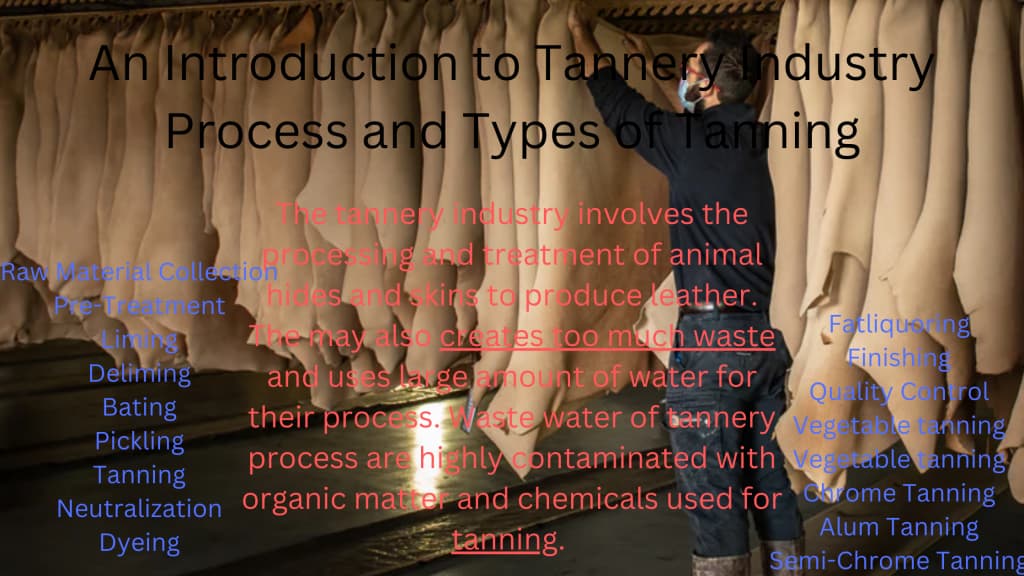
The tannery industry involves the processing and treatment of animal hides and skins to produce leather. They may also create too much waste and use large amounts of water for their process. Organic matter and chemicals used for tanning heavily contaminate the wastewater from the tannery process. The recommendation of the Environmental Protection Agency to use an effluent treatment plant for proper and environmentally friendly wastewater discharge. The main processes involved in the tannery industry are:
Raw Material Collection for Tannery
Slaughterhouses, farms, or other sources collect hides and skins. This is the main and biggest source of the tannery and leather industries.
Pre-Treatment in tannery processes & wastewater
Removal of flesh and fat
Cleaning and washing
Soaking to rehydrate the hides
Liming in the tannery process & wastewater
– Treatment with lime and other chemicals to remove natural oils and fatty acids
– Removal of hair and flesh
Deliming
Neutralization of the lime to prevent further degradation
Bating
Enzymatic treatment to break down proteins and fats
Softening and relaxation of the hides
Pickling
Acid treatment to remove excess lime and prevent further degradation
Tanning
– Treatment with tanning agents (chromium, vegetable tannins, etc.) to stabilize and preserve the hides
Neutralization in Tannery Process & wastewater
This process involves the removal of excess tanning agents and the neutralization of chemicals that were added, removed, or neutralized by washing.
Dyeing
Coloring the leather with dyes and pigments can cause significant water pollution if not properly treated.
Fatliquoring
Application of oils and waxes to enhance softness and flexibility
Finishing
Treatment with chemicals and coatings to enhance appearance and performance while Cutting, shaping, and finishing the leather into final products (shoes, handbags, etc.)
Quality Control
We conduct final inspection and testing to ensure the leather meets quality standards, resulting in highly furnished products.
Additionally, some tanneries may also use specialized processes such as
Vegetable tanning
Using plant-based tannins to produce more sustainable and eco-friendly leather.
Chrome Tanning in Tannery Process & wastewater
Chrome tanning Using chromium salts to produce soft, supple leather is mostly used, but it has toxic environmental effects due to chromium. It uses chromium salts to treat animal hides, resulting in soft, supple, and water-resistant leather, and it is a fast process that can produce leather in a day or two. Because it accounts for over 90% of leather production, chrome tanning is the most polluting process. The primary agent used in chrome tanning is trivalent chromium (Cr III). People often use chrome-tanned leather in footwear, handbags, garments, and upholstery because of its durability and versatility.
Alum Tanning in Tannery
Alum tanning uses aluminum salts to produce soft, white leather; because of that, less toxic waste is produced. It is less common than chrome tanning but still used for specific applications. Alum tanning is less common than chrome or vegetable tanning, but it has its own uses.
Semi-Chrome Tanning in Tannery Process
Semi-chrome tanning is a combination of chrome and vegetable tanning; as a result, it may affect the environment less. It aims to balance the benefits of both methods, producing leather with a mix of characteristics. Semi-chrome tanning is not as widely used as chrome or vegetable tanning but offers an alternative for specific applications. The process of tanning leather creates a lot of dirty water and solid waste because it uses many chemicals, such as sodium chloride, ammonium sulfate, chromium salt, calcium carbonate, and other harmful substances.