
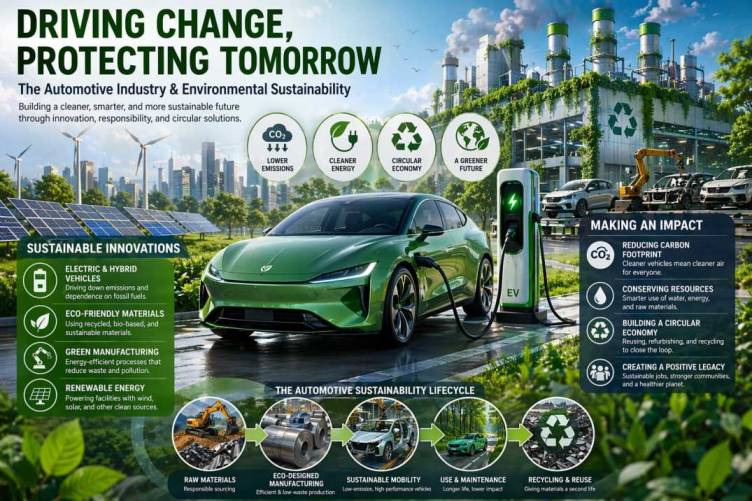

Role of Automotive Industry
The automotive industry plays a pivotal role in global commerce, providing millions of jobs and shaping the modern landscape of transportation. However, this colossal industry also brings forth significant environmental challenges. The automotive industry has historically had a significant environmental impact, contributing to climate change, air pollution, and resource depletion. A shift towards greener practices is necessary to mitigate these negative effects. In recent years, there has been a growing awareness of the environmental impact of traditional automotive practices, leading to a transformative shift towards sustainability within the sector.
Carbon Footprint Emissions for Environmental Sustainability in Automotive Industry
The burning of fossil fuels in traditional internal combustion engine vehicles contributes significantly to greenhouse gas emissions, particularly carbon dioxide. This has prompted a push towards alternative propulsion systems, such as electric vehicles (EVs) and hydrogen fuel cells, to reduce the automotive industry’s carbon footprint. These industrial units have a huge contribution to environmental sustainability. That the protection of environmental issues reduces the level of greenhouse gases in the environment.
Electric Vehicles (EVs) for Automotive Industry
The rise of electric vehicles represents a paradigm shift in the automotive landscape. With zero tailpipe emissions, EVs are seen as a cleaner alternative to traditional vehicles. While automakers are investing heavily in battery technology and charging infrastructure to accelerate the adoption of EVs and reduce dependence on fossil fuels. Recharging of batteries by solar panels and charging hubs should be easily available.

Materials and Recycling in Automotive Industry
The production of vehicles involves the extraction and processing of raw materials, which can have environmental consequences. The industry is exploring sustainable materials and adopting recycling practices to minimize the environmental impact of manufacturing processes. From recycled plastics to eco-friendly interior materials, automakers are rethinking their supply chains. Waste produced in the automobile industry, such as foam polymer, iron dust, oil, grease, paint, and plastic, should be reused or given to a waste disposal contractor approved by the EPA for incineration or scientific disposal.
Green Manufacturing Practices
Automotive manufacturers are reevaluating their production processes to incorporate eco-friendly practices. Implementing energy-efficient technologies, reducing waste, and adopting sustainable manufacturing methods. Those are becoming integral components of the industry’s commitment to environmental responsibility. Solutions to green manufacturing are electric vehicles and good fuel injectors for proper burning of fuel.
Renewable Energy & Role of Automotive Industry
The automotive sector is increasingly embracing renewable energy sources to power manufacturing plants and charging stations. Such as solar and wind energy, playing a crucial role in reducing the industry’s reliance on non-renewable energy, contributing to a more sustainable and eco-friendly operational model.
Government Regulations & Incentives
Governments worldwide are implementing stringent regulations to curb emissions and encourage the adoption of environmentally friendly technologies. However, the automotive industrial units shall be bound to go through the legal documents from government agencies like the Environmental Protection Agency. Furthermore, the requirements for safe environmental practices and taking an environmental monitoring plan for their units are subsidies and incentives for electric vehicles, as well as penalties for non-compliance with emission standards. These rules are shaping the industry’s response to environmental concerns.
Collaboration & Innovation for Role of Automotive Industry
Collaboration across the automotive ecosystem, from manufacturers to suppliers and technology providers, is fostering innovation in sustainable practices. Partnerships between traditional automakers and tech companies are leading to breakthroughs in electric and autonomous vehicle technologies. To reduce carbon footprint, electric vehicles are important.
Embracing a Sustainable Automotive Industry
Future sustainability is undeniably crucial for the future of the automotive parts industry, as it leads to positive environmental outcomes and business success. Embracing eco-friendly practices, such as sustainable manufacturing methods, natural fibers in components, and green interior design, helps meet customer expectations and regulatory requirements. Thus, continued innovation and collaboration are essential to develop and implement sustainable solutions across the industry. As the automotive sector evolves, manufacturers must stay committed to sustainability, adapt to emerging trends, and seize opportunities to contribute to a cleaner and greener world.
Collaborating with other industry players to establish green practices
The stakeholders in the automotive parts industry, manufacturers, can share best practices, leverage collective knowledge, and drive industry-wide change towards greater sustainability. However, this collaboration can lead to the development of innovative solutions, the adoption of common standards, and the promotion of a greener industry culture.
Furthermore, the automotive industry’s journey towards environmental sustainability is a complex and ongoing process. From further rethinking propulsion systems to overhauling manufacturing processes, the sector is undergoing a profound transformation. While challenges remain, the commitment to reducing the environmental impact of automotive practices is a positive sign for a greener and more sustainable future. Furthermore, as consumers demand cleaner and more eco-friendly options, the automotive industry is compelled to navigate the green roads ahead.